
Water is 98% of your coffee - and in Tashkent that matters
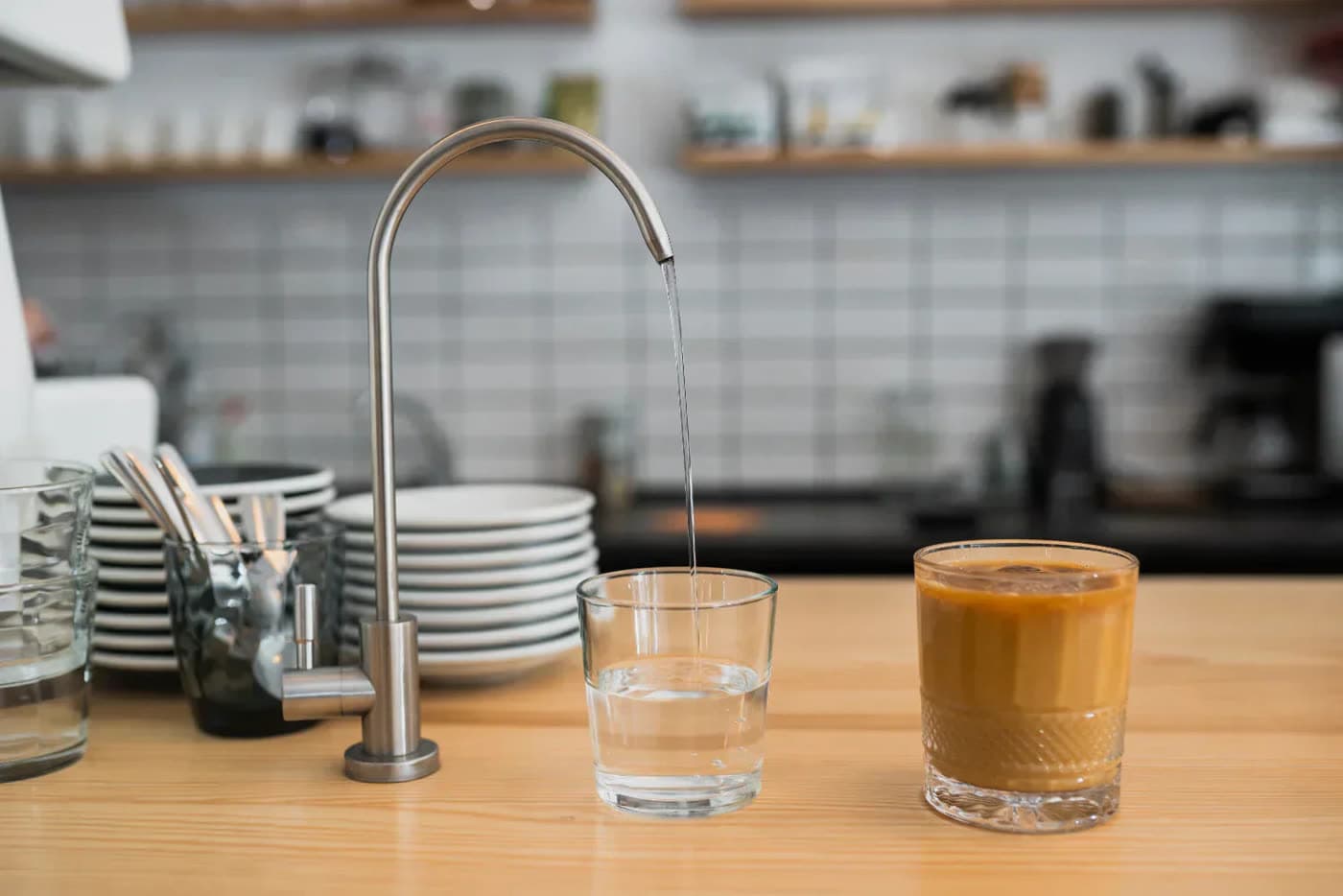
Brewed coffee is roughly 98% water. However good the beans, most of what is in the cup came out of the tap.
In Tashkent that is more than a curiosity. The water here is hard - full of calcium and magnesium - and it causes two separate problems. It helps not to confuse them.
Problem one: taste
Minerals in the water bind up the acids in coffee. The acidity and fruit disappear and what is left tastes muted, flat, faintly of cardboard.
The easiest way to prove it to yourself: brew the same coffee twice, once with tap water and once with soft bottled water. Taste them side by side. The difference is usually obvious immediately, and it surprises most people.
If your coffee is fine but boring, the water is a more likely culprit than the grind.
Problem two: scale
Those same minerals fall out of the water when it is heated. In a kettle you can see it as white crust. In an espresso machine it settles inside the boiler, the pipes and the valves, where you cannot.
It happens gradually and then becomes expensive suddenly. A machine running on unfiltered Tashkent water can scale up within months, and that is not a fault a warranty covers.
What to do at home
A simple jug filter already changes the picture, and it is cheap. Soft bottled water works too, though it gets expensive as a daily habit.
Distilled water is not the answer: with no minerals at all the coffee comes out hollow and lifeless. You want some minerals - just not this many.
What to do on the bar
Here you cannot guess. The water has to be tested before the machine is plumbed in, and the filter or softener chosen from the result.
When we install a Rocket, that is where we start every time: test the water, fit the right filtration, and write down when it needs changing. It is the least visible part of the job, and it decides how many years the machine lasts.
Related
Rocket Espresso